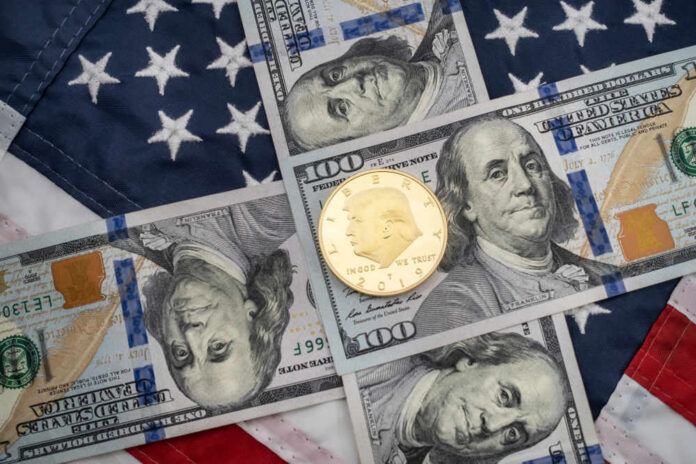
A federal arts panel made up of Trump appointees has cleared the way for the U.S. Mint to strike a 24-karat gold $1 coin with the sitting president’s face on it, pushing long-standing limits on how far Washington’s leaders can glorify themselves using government power.
Story Snapshot
- A Trump-appointed federal arts commission unanimously approved a 24-karat $1 gold coin featuring President Donald Trump for America’s 250th birthday.
- The decision tests a 160-year tradition against putting living people on U.S. money, raising new legal and ethical questions.
- Treasury officials argue newer coin laws give them room to honor a sitting president, while critics say this twists the rules and weakens basic republican norms.
- The fight taps into a deeper anger on both left and right about elites using government symbols to celebrate themselves instead of serving ordinary Americans.
Trump $1 Gold Coin Gets Green Light from Handpicked Arts Commission
On March 19, 2026, the United States Commission of Fine Arts voted unanimously to approve the design of a 24-karat gold $1 coin featuring President Donald Trump, to be issued for America’s 250th anniversary. The commission, which advises on federal coin and medal designs, endorsed a portrait of Trump based on a White House photo, describing his “forceful appearance” as suitable for a sitting president during the Semiquincentennial. All current members were appointed by Trump, a fact that has fueled political criticism of the decision.
News outlets report that the coin will be produced by the United States Mint as part of the broader 250th anniversary coin program, with this design standing out as the only one featuring a living person on the obverse. Coverage describes Trump seated at a desk in the Oval Office, with inscriptions marking the nation’s Semiquincentennial on July 4, 2026. Supporters inside the administration frame the coin as a patriotic tribute to Trump’s leadership at a historic moment for the country.
How the Trump Coin Collides with a Long Tradition Against Living Faces on Money
For more than a century, the United States has followed a clear norm: no living people on currency or coins, in order to avoid anything that looks like a king or cult of personality. That custom traces back to the 1860s, when Congress reacted to a minor official sneaking his own face onto paper money by passing the Thayer Amendment, which banned living individuals from appearing on federal securities and currency. Later laws and regulations carried that spirit over to coins, even if the original language did not list them by name.
Modern rules tightened the standard. The Presidential $1 Coin Act requires that presidents be dead for at least two years before they can appear in that series. A nonpartisan explainer notes that by law, “only the portrait of a deceased individual may appear on United States currency,” capturing the broad policy that has guided designs for decades. That is why this Trump gold coin is drawing so much attention: it is a rare case where a living president’s likeness will appear on an official United States Mint product, not a private novelty token.
Legal Loopholes, Executive Power, and Fears of Self‑Promotion
Treasury Department lawyers point to their authority under federal coinage statutes to create commemorative coins and argue that the 2020 Circulating Collectible Coin Reauthorization Act and related provisions give the secretary enough discretion to approve a Trump design for a non-circulating gold piece. Legal analysts say the administration is leaning on the fact that some older bans mention “currency” and “securities” but not coins by name, plus the special status of commemorative issues. That patchwork has opened the door to this move, even if it clashes with tradition.
Critics, including Democratic lawmakers and some museum and ethics experts, counter that this reading twists the spirit of the law and weakens basic republican norms that treat national symbols as shared, not personal. They warn that letting a sitting president place his own image, in pure gold, on official money blurs the line between public service and self-promotion. To many ordinary Americans on both the right and left, the episode looks like one more example of elites in Washington using the machinery of government to flatter themselves while real economic and social problems go unchecked.
Why This Coin Hits a Nerve for Both Conservatives and Liberals
Conservative voters who backed Trump because they felt ignored by a distant “deep state” now see that same state striking gold coins with a politician’s face while energy prices, immigration fights, and debt worries continue. Some may cheer the coin as a thumb in the eye of liberal critics, yet the basic concern remains: Washington seems more focused on symbols and ceremonies than on cutting waste, defending borders, or restoring affordable living. That gap feeds the sense that the system serves the powerful first.
Liberal voters opposed to Trump’s “America First” agenda also view the coin as a troubling sign, but for different reasons. They fear it normalizes strongman-style politics and sends a message that public institutions now exist to praise one leader instead of representing everyone. For many on the left, putting a living president on a gold coin while inequality grows and safety nets shrink undercuts the idea of a humble, accountable republic. In that way, anger from both sides meets in the same place: a belief that the federal government has drifted far from serving the common good.
Sources:
cbsnews.com, abcnews.com, aljazeera.com, nytimes.com, cfa.gov, youtube.com, thehill.com, southfloridareporter.com, govmint.com, congress.gov, reddit.com, usmoneyreserve.com