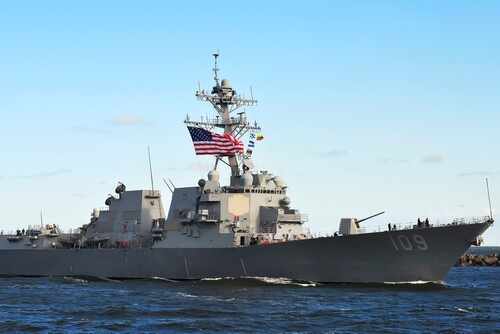
The Navy’s “little crappy ship” is now a $100 billion warning sign about how deeply broken Washington’s weapons-buying system has become.
Story Snapshot
- The Littoral Combat Ship program’s lifetime cost is projected around $100 billion, far above early promises.
- Per-ship costs roughly tripled from original $220 million estimates as design changes, delays, and weak testing piled up.
- The ships suffer from mechanical failures, high operating costs, and missing mission gear, limiting combat usefulness.
- Early decommissionings and “little crappy ship” criticism show a system that serves contractors and bureaucrats more than taxpayers or sailors.
How a “Cheap” Coastal Warship Became a $100 Billion Burden
In the early 2000s, Navy leaders sold the Littoral Combat Ship as a fast, flexible coastal warship that would be cheap enough to buy in large numbers. They told Congress each ship would cost about $220 million, making it seem like a bargain compared with big destroyers and carriers. That low sticker price helped the program speed through approval with limited debate and less pressure for strict testing. Many in Washington, on both sides, trusted those numbers and moved on.
As the first ships were built, costs exploded. Government reviews show per-ship construction costs more than doubled, landing around $500–650 million once real equipment and changes were counted. One Government Accountability Office report said building the first 32 ships would cost about $21 billion, nearly triple what the Navy first promised per vessel. On top of that, the Navy itself now expects more than $60 billion just to operate and support the planned 35-ship fleet over its life. That is how a “cheap” idea grew into a roughly $100 billion obligation.
Mechanical Failures, Missing Missions, and Early Retirements
These ships were supposed to swap “mission packages” so one hull could do many jobs, like hunting submarines, clearing mines, and fighting small boats near shore. In reality, those modular systems fell far behind schedule, failed tests, or were scaled back, leaving many ships without the tools they were built to carry. At the same time, reports describe chronic mechanical problems, including propulsion issues that kept ships stuck in port and made sailors question whether the vessels could survive tough combat or even long deployments.
Government watchdogs found that weak testing and rushed timelines meant key flaws showed up only after ships were already in the fleet. The Government Accountability Office concluded the Littoral Combat Ship still has not proven it can reliably perform its intended missions and faces serious challenges in its defenses and equipment. Some ships have been retired after only a few years of service, long before their expected 25-year life, wasting billions in construction and lost service value. Defense analysts now describe the program as a costly failure and expect the Navy to phase the class out aggressively.
What the Littoral Combat Ship Reveals About the “Deep State” Problem
The Littoral Combat Ship disaster is not just about one “bad ship.” It fits a broader pattern where big defense projects overrun costs, underperform, and still keep money flowing to major contractors. The Government Accountability Office has found that many new lead warships blow past budgets and schedules, showing that the system itself rewards optimistic promises and weak oversight. For families watching taxes climb and wages lag, a $100 billion misfire feels like proof that Washington’s priorities are upside down.
USS Billings (LCS-15) Freedom-class littoral combat ship @ Muelle de Ponce, 3:15pm 7/13/2026.@r4streando @sipjack1776 @Spidergwenweb1 @guelo_prspotter pic.twitter.com/rfktgpvDHh
— Michael Bonet 🇵🇷 (@MichaelBonet8) July 13, 2026
Conservatives see this as another example of bloated government spending and insiders getting rich while everyday Americans struggle. Liberals see it as a case where powerful corporations and the Pentagon operate with little accountability, while social needs at home go unmet. Both sides can look at the “little crappy ship” and ask the same question: if our leaders cannot stop pouring money into proven failures, who are they really working for? The Littoral Combat Ship story suggests the answer is not the sailors on board or the taxpayers footing the bill.
Sources:
19fortyfive.com, propublica.org, okcfox.com, gao.gov, youtube.com, en.wikipedia.org, usni.org, allhands.navy.mil, usscleveland.org, forum.gcaptain.com, warontherocks.com