Defense Secretary Pete Hegseth told Senate Democrats the Pentagon will ignore a federal deadline requiring President Trump to seek congressional approval for the Iran war, setting up a constitutional showdown over executive war powers as the conflict reaches 60 days.
Pentagon Rejects Congressional War Powers
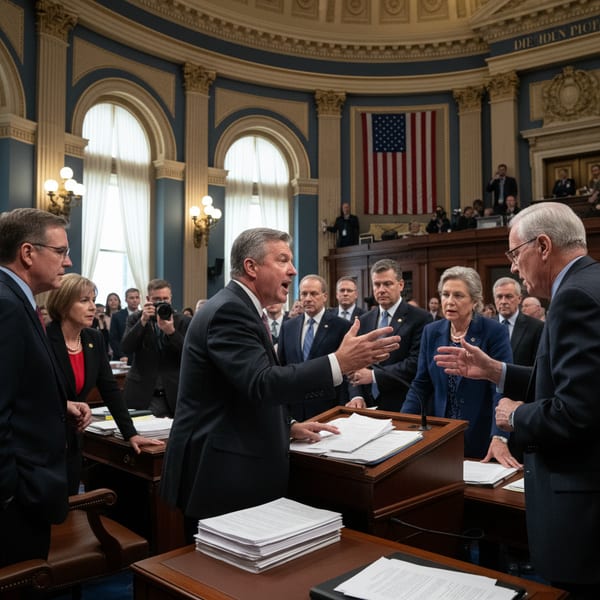
Hegseth appeared before the Senate Armed Services Committee on Thursday, one day before the Iran war hits the 60-day mark established by the War Powers Resolution. The law requires presidents to obtain congressional authorization or withdraw forces after two months of combat. Hegseth claimed the current ceasefire pauses or stops the 60-day clock entirely. Senator Tim Kaine of Virginia, who leads efforts to assert congressional war powers, immediately challenged that interpretation as incorrect under federal statute.
Breaking news: Defense Secretary Pete Hegseth argued that the U.S. can continue fighting in the Iran war despite a law that requires Congress’s approval after 60 days of hostilities.
Friday marks the 60-day deadline of the War Powers Act. https://t.co/zrNpLfek0n
— The Washington Post (@washingtonpost) April 30, 2026
Democrats Challenge Success Claims
The defense secretary defended the campaign as a historic military success despite polls showing majority American opposition to the war launched February 28 alongside Israel. Senator Richard Blumenthal of Connecticut questioned Hegseth’s assessment, prompting the secretary to accuse defeatist Democrats of clouding American minds. Democrats cited Iran’s retention of highly enriched uranium, the ongoing Strait of Hormuz closure driving energy prices higher, and an Iranian girls’ school bombing as evidence contradicting Pentagon success claims.
Cost Estimates Under Fire
Several Democratic senators questioned the Pentagon’s stated 25 billion dollar cost estimate for the campaign. Blumenthal said the actual costs appear well below reality based on classified information available to lawmakers. Senator Jack Reed of Rhode Island, the committee’s ranking Democrat, delivered a harsh critique of Hegseth’s leadership. The defense secretary declined to say when the Pentagon would release findings from the school bombing investigation launched two months ago, emphasizing no military works harder to avoid civilian casualties.
Constitutional Crisis Looms
The confrontation marks Hegseth’s second congressional appearance in two days and highlights growing tensions between executive and legislative branches over constitutional war authority. The War Powers Resolution, passed in 1973 over presidential veto, was designed to check executive military action after Vietnam. Trump’s administration now faces a critical decision: seek congressional debate and authorization, withdraw forces, or continue operations while claiming the ceasefire exempts them from compliance with federal law governing military engagements abroad.