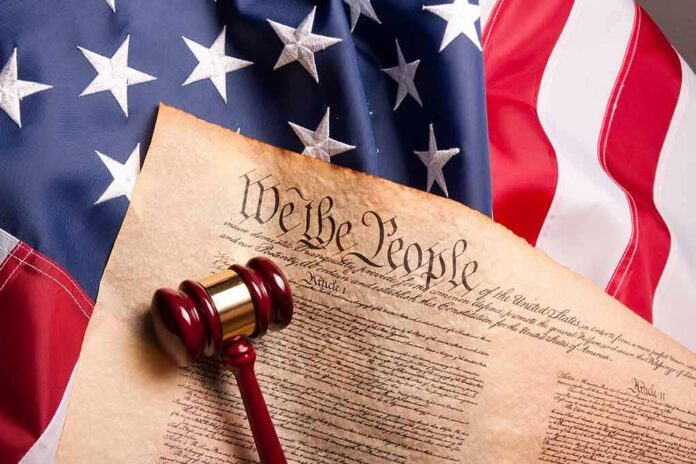
A national progressive coalition wants to swap the Declaration of Independence for a new “Declaration of Interdependence,” and they are organizing to make it a rallying banner.
Story Snapshot
- Next250 leaders propose a new Declaration tied to America’s 250th birthday.
- Public-facing pillars include a living wage, climate action, and reproductive rights.
- Linda Sarsour and allied activists promote mass events around this message.
- Conservative critics call the effort a push to erase core American ideals.
Progressive leaders unveil a plan to co-write a new national declaration
The Next250 coalition, led by well-known organizers including Linda Sarsour, Aimee Allison, Saru Jayaraman, Valarie Kaur, and Carmen Perez, proposes creating a “Declaration of Interdependence” to mark the nation’s semiquincentennial. Their public statements frame the project as a replacement or successor to the 1776 Declaration, built on modern values of unity and shared responsibility. The group aims to convene people across the country, collect input, and publish a guiding text to shape public policy for the next two and a half centuries.
Next250 describes five policy pillars that define the new declaration’s goals: a living wage for all, climate justice for all, health care and reproductive rights for all, common sense gun reform for all, and voting rights for all. A release summarizing the effort lists these themes as the crowd-sourced values most often cited by participants. Organizers say the text will reflect today’s America, include more voices, and push elected leaders to enact laws consistent with those principles.
Public mobilization and messaging around Interdependence
Coalition partners scheduled rallies and cultural events to gather support for the new declaration. Linda Sarsour promoted the Washington, D.C., mobilization as a launch point for a national push. She described it as a chance to “declare interdependence” and press for a unified progressive vision. Allied groups frame the moment as action, not ceremony, and urge people to sign, share, and organize through local chapters and faith, labor, and student networks that feed content and signatures into the drafting process.
Supporters pitch the project as a patriotic update that expands the founding promise. They argue the original declaration opened a door to liberty, but today’s challenges require a document that centers economic dignity, climate resilience, and equal participation in public life. They say adding these commitments will strengthen the republic for the long haul. They also present the process itself—open, participatory, and iterative—as the point, claiming that a modern charter should grow from the people up.
Sharp conservative backlash frames the plan as an attack on first principles
Conservative media and commentators portray the Interdependence push as an attempt to erase individual rights and national sovereignty. They argue the proposed pillars would turn inalienable rights into state-managed entitlements, and they link the plan to a broader left-wing project to remake the culture and the Constitution. Townhall highlighted Linda Sarsour as a driving voice and accused the campaign of trying to “destroy” the country’s foundations by replacing its most famous founding text. That charge lands because the organizers speak openly about a successor charter.
From a common-sense, conservative view, swapping the 1776 Declaration for a manifesto of policy goals crosses a red line. The original text names God-given rights and limits government. The Interdependence draft, as described, elevates government guarantees as the source of security. That flips the script. If rights come from the state, then the state can take them away. Skeptics will ask who enforces these promises, how much it costs, and what freedoms get traded to deliver them.
Historical echoes and the real test ahead
American reformers often try to revise national rhetoric during periods of social strain. The Reconstruction, Progressive, Civil Rights, and women’s rights eras all fought to bend founding ideals toward new claims. Scholars have traced how declarations, constitutions, and bills of rights have spurred similar debates here and abroad. That context explains the tactic, but it does not settle the argument. This fight is about first principles, not only policies. The deeper question is whether a nation thrives more on independence or interdependence.
What to watch next
Organizers plan to collect endorsements and signatures, publish draft language, and press candidates to adopt the platform. Expect a polished text that rallies core supporters and seeks moderate buy-in with the language of unity. Also expect escalating pushback from civic groups who see the Declaration as a moral North Star beyond policy wish lists. If the Interdependence text reads like a legislative agenda, mainstream voters may tune out. If it anchors timeless rights, it may find a broader lane.
Sources:
townhall.com, bioneers.org, ctpublic.org, morningstar.com, dissenter.com, commondreams.org, youtube.com