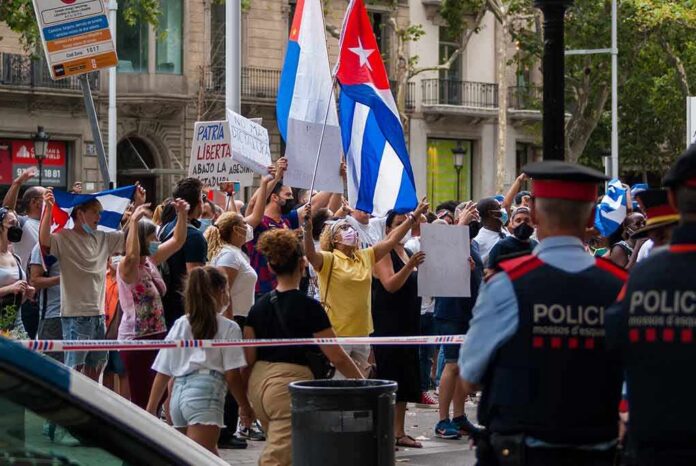
A new State Department report warns that Cuba-linked activists are openly planning protests at U.S. military bases, Immigration and Customs Enforcement (ICE) sites, and federal buildings, raising fresh questions about foreign influence on American soil.
Story Snapshot
- A Cuba-aligned activist network published a rapid-response plan for protests at U.S. bases, ICE facilities, and federal buildings.
- The State Department links the National Network on Cuba to a Cuban government arm, the Institute of Friendship with the Peoples (ICAP), recently sanctioned for aiding Cuban intelligence.
- Justice and Treasury officials are investigating more than 100 U.S. nonprofits for alleged coordination with Cuban officials in a foreign influence campaign.
- Activist groups deny any role in terrorism and claim their protests are legitimate dissent, setting up a clash between national security and activist politics.
State Department: Cuba-Linked Network Targets U.S. Bases and ICE
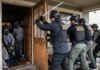
The State Department report says a U.S.-based coalition called the National Network on Cuba shared a “National Rapid Response Plan” in June that lays out protests at U.S. military bases, ICE offices, and federal buildings. The plan calls for activists to mobilize within 24 hours if the United States escalates pressure on the Cuban regime, aiming to make any “war on Cuba” politically and materially costly. This is not a leaked secret memo; it was posted publicly, showing how bold this network has become in organizing actions against core American institutions. For many readers, the idea of foreign-linked groups rallying crowds at bases and ICE sites looks less like peaceful dissent and more like pressure on the very tools that keep our nation secure and our borders under control.
The report argues that this rapid-response plan is part of a larger Cuba-aligned network reaching into U.S. left-wing politics. It identifies six main organizations, including the National Network on Cuba, Code Pink, the National Lawyers Guild, and The People’s Forum, and says they share ties through delegations to Cuba, joint campaigns, and coordination with Cuban officials. The report stresses that these groups can quickly mobilize protests against U.S. policy, especially on immigration enforcement and national defense. While the document admits it does not yet know how deeply each group took part in the specific rapid-response plan, it treats the overlap in relationships as a serious warning sign. Under the Trump administration’s second term, this fits into a broader push to expose far-left networks that may be shaped or funded by hostile foreign regimes.
ICAP Sanctions and the Foreign Influence Investigation
At the center of this story is the Cuban Institute of Friendship with the Peoples, known as ICAP. The State Department describes ICAP as a Cuban government entity that runs Havana’s international influence machine and coordinates more than 2,000 “solidarity” groups in over 150 countries. ICAP’s leader, Fernando González Llort, is a former member of the Wasp spy network that infiltrated exile groups and gathered intelligence on U.S. military sites in Florida in the 1990s. In June 2026, the Trump administration sanctioned ICAP under a new executive order targeting Cuban actors responsible for subversive, anti-American activities, formally naming it as tied to Cuban intelligence efforts. This is not mere rhetoric; sanctions carry legal teeth and signal that Washington views ICAP as part of an organized foreign campaign against U.S. interests.
The report says the National Network on Cuba “works closely” with ICAP and is part of this global web. It notes that ICAP is a Cuban state body, while the National Network on Cuba is a U.S. coalition pushing friendlier ties with Havana. But Justice Department and Treasury officials are now going further, probing whether U.S. nonprofits tied to this network have crossed the line from outreach into foreign-directed influence. Fox News Digital reports that at least 145 nonprofits and activist groups, including Code Pink, The People’s Forum, and the National Network on Cuba, are under review for allegedly coordinating lobbying, messaging, fundraising, delegations, and organizing with Cuban officials. These are described as “alleged” foreign influence activities, which means the investigations are still underway and formal charges have not yet been brought. Even so, the scale of the probe shows that the federal government views this as more than fringe activism; it is examining whether foreign regimes are steering domestic protest groups against American policy.
Activists Push Back While Threat Debate Grows
Groups in the Cuba solidarity movement strongly reject the State Department’s claims. The National Network on Cuba publicly condemned the report, calling its assertions “untrue” and insisting that Cuba clearly rejects terrorism. Supporters say the rapid-response plan is simply a nationwide protest strategy built by U.S. activists to oppose what they see as unjust sanctions and intervention. They argue that coordinating rallies and messaging is protected political speech, not terrorism or espionage. So far, they have not released detailed financial records or travel logs to answer questions about ties to ICAP or foreign funding, and they have not directly refuted specific points such as the National Lawyers Guild’s 2026 pledge to work closely with Cuba solidarity efforts.
State Department Report: Cuba-Linked Activists Now Planning Protests at US Bases, ICE Siteshttps://t.co/nHk22kKKib
— RedState (@RedState) July 20, 2026
This clash sits inside a wider pattern U.S. security agencies have been warning about for years: foreign governments use activist networks and media partners to deepen America’s divisions and weaken trust in our institutions. Intelligence assessments have long named countries like China, Russia, and Iran as major players in these influence operations, and Cuba is now being placed in that same category. Research shows that when the public learns that protests may be shaped by foreign interference, support for those movements drops and backing for strong government responses goes up. For conservative readers, the idea that foreign-linked organizers are planning protests at U.S. bases and ICE offices hits several core concerns at once: border security, respect for the military, and defense of the Constitution against outside tampering. The Trump administration’s decision to declare a national emergency over Cuba’s activities in early 2026 underscores how seriously this threat is now being taken at the federal level.
Sources:
redstate.com, en.cibercuba.com, state.gov, foxnews.com, washingtontimes.com, raceandequality.org, washingtonpost.com, prokerala.com, reuters.com, adncuba.com, whitehouse.gov