A single explosion near Hiram Hospital in Tyre turned one of war’s safest places on paper into yet another frontline question: are hospitals still off-limits, or only in theory?
Story Snapshot
- Lebanon’s Health Ministry says an Israeli strike beside Hiram Hospital in Tyre injured 13 staff and badly damaged the facility.
- On-site reporting shows blown-out ceilings, shattered glass, and damaged medical equipment inside the hospital.
- Israel frames such attacks as strikes on nearby targets, while Lebanon highlights risk to protected medical sites.
- The incident fits a larger pattern of repeated strikes affecting hospitals across southern Lebanon.
How a Nighttime Strike Turned a Hospital Into a Battlefield Question
Lebanese officials say the strike that rattled Tyre did not just shake windows; it ripped into the area immediately beside Hiram Hospital and left 13 members of its staff wounded.[4] The state-run National News Agency described an airstrike “in the vicinity” of the facility that caused “significant” or “severe” damage, language that goes far beyond a stray shockwave. For patients and doctors, that distinction between “near” and “at” the hospital was academic the moment ceilings started to fall.
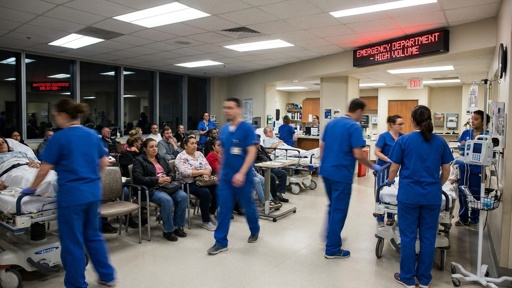
Reporters who walked the halls after the blast did not have to rely on ministry talking points. An Agence France-Presse correspondent saw shattered glass, blown-out ceiling panels, and damaged medical equipment throughout the multi-story hospital, a clear sign that the blast effects reached deep inside the building rather than stopping at the parking lot.[1] The hospital’s chief executive said around 40 patients were inside, including seven in intensive care, when the strike warning came through, forcing a frantic internal evacuation.[1]
What We Know About the Injured Staff and Hospital Damage
The Lebanese Health Ministry’s casualty figure—13 staff members injured—appears consistently across Lebanon-based outlets and international coverage.[4] The hospital director later said roughly 30 staff sustained minor injuries, likely from flying glass and debris, and that none of the patients were physically harmed.[1] The damage assessment described extensive harm to the building’s interior, with some areas temporarily unusable and the emergency department forced to close for a time before partial operations resumed.[1]
Separate reporting on similar strikes in southern Lebanon shows the kind of damage these “nearby” hits can cause when medical campuses are involved. Lebanese officials say other recent strikes, such as one on Tibnin Public Hospital, tore into critical services including the emergency department, intensive care unit, and ambulance fleet, while injuring both staff and civilians.[2] Health authorities count at least 16 hospitals affected and more than 100 emergency and healthcare workers killed since the broader fighting resumed in March.[2] Those numbers establish a pattern rather than a one-off anomaly.
Competing Narratives: Military Target or Medical Red Line?
The Israeli side, to date, has not released a detailed public account that specifically addresses the Hiram Hospital incident—no strike log, no engineering survey of the damage, no granular rebuttal of Lebanon’s description.[4] Coverage sympathetic to Israel tends to describe such operations as targeting nearby military-linked structures or infrastructure, with hospital harm framed as collateral to strikes on other buildings.[1][3] Without a clear Israeli explanation for Tyre, that counter-narrative rests mostly on general justifications, not case-specific evidence.
From a common-sense conservative perspective, two points can coexist. First, Israel fights a real enemy that embeds within civilian areas, which undeniably complicates targeting decisions. Second, when multiple independent observers walk through a damaged hospital, record injured medical workers, and capture visible structural harm, it strains credibility to dismiss all of it as propaganda.[1][4] The stronger evidentiary record in Tyre backs the claim of significant hospital impact, even if the intended aim point lay meters away.
Why This One Hospital Hit Matters Far Beyond Tyre
The Tyre incident sits inside a larger struggle over what “protected status” means once the missiles fly. Humanitarian reporting on Lebanon’s latest war phase describes repeated damage to hospitals and clinics, with operating rooms, emergency wards, and electrical systems all hit in different towns.[2][3] Each new strike chips away at the assumption that medical facilities remain safe zones and pushes local families to ask where, exactly, they can still go when everything else starts to burn.
Lebanese Health ministry says an Israeli air strike again hit Hiram Hospital in Tyre wounding 13 hospital staff and causing significant damage and appealed to the int community to ‘put an end to the ongoing escalation and the expansion of Israeli attacks’
— Alex Crawford (@AlexCrawfordSky) June 1, 2026
American readers over forty have watched this pattern emerge over decades—from Iraq to Syria to Ukraine. Official statements on all sides become more polished, but the ground truth still shows up in the same way: broken equipment, wounded staff, and patients wheeled through corridors full of dust and glass. When a hospital like Hiram in Tyre ends up within the practical blast radius of contested targets for the third time in one conflict, that raises a hard question. If the rules of war still exist, who is left to enforce them?
Sources:
[1] Web – Lebanon says Israeli strike damages hospital in city of Tyre
[2] YouTube – Israeli Airstrike Near Hiram Hospital in Tyre Injures Thirteen Staff
[3] YouTube – Israel Strikes Tyre In Southern Lebanon, 13 Hospital …
[4] Web – Israeli Strike Injures 13 Hospital Workers in Tyre – Palestine …