California’s endless vote count is not a mystery of math; it is a design choice that Republicans have tolerated for years while loudly complaining and quietly doing almost nothing.
Story Snapshot
- California law invites slow, late-breaking results by allowing mail ballots postmarked on Election Day to arrive and count up to a week later.
- The official canvass stretches to roughly a month after Election Day, creating a long window where narratives outrun facts.
- Democrats aggressively work this system; Republicans mostly grumble on television and social media.
- Conservatives must either adapt with serious reforms and ground game, or stop claiming surprise when the late counts shift blue.
How California’s Rules Create the Endless Election
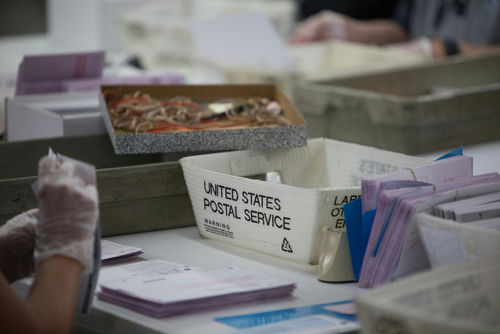
California does not stumble accidentally into weeks-long vote counts; the state built the process that way on purpose. Every active registered voter now receives a mailed ballot, and any voter may choose to cast that ballot instead of voting in person.[3] Mailed ballots must be postmarked on or before Election Day, but election officials are required to accept them for up to seven days after the election if they arrive in that window.[2][3][5] That one design choice guarantees that “Election Night” is, at best, halftime. County officials then have roughly thirty days to conduct the official canvass, verify signatures, reconcile precincts, and finalize results before state certification.[1] The system is legal, public, and documented, but it is also tailor-made to stretch out suspense in any competitive race.
From a common-sense conservative perspective, the problem is not only what the law allows, but how that slow-motion process collides with human nature. Voters are accustomed to clear winners by bedtime, not a month-long trickle of updated tallies. When early in-person and early-arriving mail ballots skew one way, then later mail ballots that arrive days after the election skew the other way, it feeds a perception that “somebody found votes in a back room” even when officials are just following the statute.[1][4] That perception gap is exactly where distrust, rumor, and bad-faith spin thrive.
Why Late-Counted Mail Ballots Look Crooked Even When They Are Legal
The pattern in California is simple but politically explosive: early results are dominated by ballots returned before Election Day, while a large share of mail ballots are dropped off or mailed at the last minute and then counted later.[1] Analysts have documented that Democrats use vote-by-mail at higher rates than Republicans, especially in large urban counties where mail voting is heavily promoted and culturally normalized.[2][3] When those late-arriving ballots lean heavily Democratic, every update can look like a “blue wave” that swamps Republican Election Night leads. Legally, this reflects turnout behavior and processing time, not proof of fraud.[3][4] Politically, it feels like the rules were written to let one side come in after the buzzer and flip the score.
California officials and supportive groups counter that the process is both authorized and secure. The Secretary of State’s guidance stresses that all valid vote-by-mail ballots are counted, regardless of whether the outcome has already been projected by the media.[3] Voters receive prepaid return envelopes and can check the status of their ballots online, from mailing through acceptance.[2][3] County election offices follow a public canvass schedule that includes signature verification and, in many jurisdictions, manual checks of machine tallies.[1] Supporters argue that the extended timeline trades quick results for accuracy, ballot curing, and reduced rejection of legitimate votes, especially from voters who mail their ballots close to the deadline.[4] From that lens, “slow” equals “thorough,” not “rigged.”
Where Genuine Vulnerabilities Meet Republican Neglect
Even if the basic framework is legal, conservatives are right to see soft spots that clash with traditional ideas of election integrity. Mailing ballots automatically to every active registrant risks sloppy rolls and misdirected ballots if counties do not aggressively maintain accurate lists.[3] Allowing a week of arrivals based solely on a postmark standard introduces an obvious point of concern: the public must trust both the postal service and local officials to reject anything that does not meet the deadline or fails signature verification.[2][3] The sheer scale of mail processing in a state as large as California magnifies any administrative error. Yet the central conservative failure has been strategic, not just legal. For several cycles, Republicans have largely sat on the sidelines while Democrats built disciplined operations around these very rules, from mass messaging about mail voting to organized follow-up efforts that help voters cure signature problems and ensure their ballots count.[1][2][4] Complaining about “shenanigans” after the fact rings hollow when one party does not invest in competing within the system while working, in parallel, to tighten and reform it.
Conservative values point toward two simultaneous tracks: securing the rules and mastering the battlefield as it exists today. On the security side, Republicans in California and nationally can credibly push for cleaning voter rolls regularly, tightening identification and signature standards for mail ballots, shortening the post-election receipt window, and publishing daily, county-level reports that distinguish between categories of ballots in the queue.[2][3][5] Those reforms match common-sense expectations for clarity and speed without shutting legitimate voters out. On the strategic side, conservative leaders must finally decide whether they want to win under California’s framework or merely use it as a permanent grievance machine. That means educating older and skeptical voters that voting by mail is a tool, not a surrender, allocating real money to ballot tracking and curing outreach, and monitoring local election offices with competent legal teams instead of cable-news monologues.
Sources:
[1] Web – It’s Time for the GOP to “Nut Up or Shut Up” About California’s Voting …
[2] Web – Official Canvass – Vote Counting Process
[3] Web – Voting FAQ | California Voter Foundation
[4] Web – Vote By Mail – California Secretary of State – CA.gov
[5] Web – Commentary: Late-Arriving Mail-In Ballots Don’t Cause California’s …