A 40-something security guard lay crushed under seven stories of concrete for eight days—and lived to tell about it.
Story Snapshot
- Hernán Alberto Gil Flores spent eight days trapped under a collapsed Venezuelan mall parking garage
- Rescuers from at least seven countries fed him water through a tube and spoke with him for days before extraction
- The final rescue became a rare bright symbol of hope in a country already battered by crisis
- The “miracle” story also raises hard questions about building safety and government disaster readiness
A man buried under a mall becomes the face of hope
The earthquakes that hit Venezuela did not just crack buildings; they peeled open the ground under daily life. In La Guaira, the Galerías Playa Grande shopping center was supposed to be a place for errands and weekend strolls. Instead, its parking garage folded in on itself, trapping former security guard Hernán Alberto Gil Flores under what CNN described as 29 feet of wreckage from a nine‑story structure. For nearly eight days, he was simply gone, buried under the weight of a failed system as much as failed concrete.
Search crews did not find a clear void with a man waiting. They first found signs. International teams, including Chilean specialists, used dogs, sensors, and old‑fashioned listening to locate a faint voice below the rubble. Once they reached a narrow space, they saw something small but huge: Hernán’s hand, and the proof that he was still alive. From that moment, the operation shifted from pure search to a race to keep one man stable in a place that could still kill everyone around him.
Keeping a buried man alive with a hose and courage
Rescuers had to do something very simple in a very brutal setting: keep a trapped man talking, drinking, and hoping. Reports from the scene say teams passed water and fluids down to Hernán through a hose or tube, sometimes even using a syringe to push liquids to him. He answered their questions. He told them he was still there. Salvadoran crews posted that he remained responsive and hydrated even after more than a full day of their direct effort to reach him. That detail matters, because hydration and contact are what turned a body under rubble into a patient they refused to give up on.
These crews were not all local firefighters with one truck. They came from Chile, Portugal, Mexico, Costa Rica, El Salvador, the United States, and Venezuela itself. They worked side by side despite tense politics between some of their countries. El Salvador’s president, Nayib Bukele, went public to say, “Our teams have managed to reach Hernán Alberto Gil Flores” and confirmed direct contact. For once, international cooperation was not a press release; it was a literal lifeline pushed through broken concrete.
The extraction that almost fell apart at any second
Finding Hernán was only half the battle. The structure above him was still shifting and dangerous. One report from Costa Rica described more than a dozen approach maneuvers, each one a careful attempt to get closer without triggering a new collapse. At one point, crews had to evacuate suddenly when the debris threatened to give way. Chile’s fire brigade later said it took about 70 hours of continuous work to finally free him and get him to a medical facility. Every hour raised the risk for rescuers and for the man they were trying so hard to save.
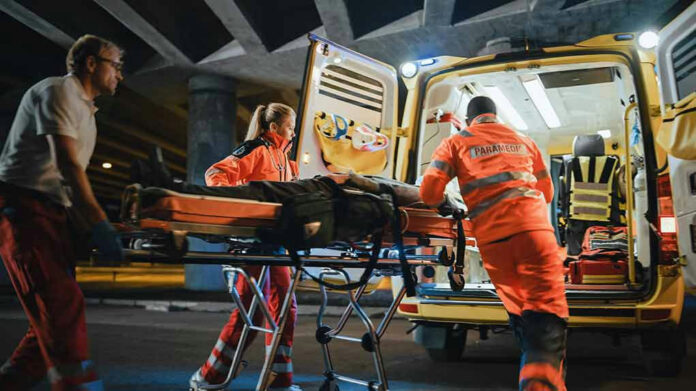
When cameras finally captured the moment he was pulled out, the world saw more than a stretcher. People saw a middle‑aged father, once a mall guard, now the survivor of a disaster that had killed thousands. He was reported to be “in good condition” after the rescue, which is astonishing considering the pressure, the dust, the lack of movement, and the emotional shock of hearing death all around him. His wife later called him “a warrior,” and it is hard to argue with that description when you picture eight nights alone under black concrete, sipping water through a plastic tube.
A miracle story in a country that needed one, and the questions it cannot erase
The rescue of Hernán quickly became a symbol. News outlets and politicians called it “miraculous,” and for good reason. Venezuelans watched from a nation in mourning, where over two thousand deaths had already been counted and many more feared. In a place facing shortages, looting, and long‑running political and economic crisis, one man coming out alive felt like proof that grit and skill could still beat tragedy. That matters deeply to normal people who just want a reason not to give up.
Yet a sober look, especially from a conservative, common‑sense view, cannot stop at the miracle headline. A shopping center parking garage should not pancake into seven levels of deadly rubble so easily. International crews should not have to fly in from half the world away because local systems are overwhelmed. The very need for seven countries to dig out one guard hints at deep problems in building codes, enforcement, and disaster planning that polite media often glosses over. The heroic work does not erase the failures that made such heroism necessary.
From one man’s survival to a test of responsibility
Hernán’s story shows the best of human courage chained to the worst of institutional weakness. Foreign rescue teams, Red Cross groups, and national leaders stepped up fast and gave their all. They deserve respect and thanks. But if this tale stays only a “miracle rescue” and never becomes an honest audit of why that mall collapsed, who signed off on its safety, and why Venezuela’s own response needed so much outside help, then the lesson will be wasted. For a nation already on edge, real dignity means not just saving lives after the fact, but demanding standards so fewer people end up buried under their local mall at all.
Sources:
youtube.com, unotv.com, teletica.com, telecinco.es, instagram.com, 10news.com, cnn.com, upi.com, publimetro.com.mx